
Acrylonitrile butadiene styrene(ABS) is one of the most widely used engineering plastics, it offers an excellent range of performance characteristics including toughness, strength, and the flexibility to be processed. This article will provide a systematic analysis of acrylonitrile butadiene styrene to help you better understand this material.
What is ABS

Structure
ABS is a thermoplastic polymer containing three monomers, acrylonitrile, butadiene, and styrene. It has a density ranging from about 0.9-1.53 g/cm3 and is commonly prepared by an emulsion method. All of the components of ABS lead to its special advantages.
Melting Point
As an amorphous polymer, the melting point of ABS is not fixed.. ABS will not just melt at a particular temperature, but will gradually soften when heated. Its glass transition temperature(Tg) is about 105°C.
ABS Properties
Mechanical Strength
One of the outstanding properties of ABS is its impact resistance and toughness that is maintained regardless of the temperature, when at low temperature condition the butadiene content in ABS keeps some degree of toughness together with exceptional impact resistance. Meanwhile, under a specific load the material is not easily bent or deformed and has very high dimensional stability, which can meet the requirement of the majority of structural parts.
Chemical Resistance

ABS has excellent resistance to water, salts, acids and bases, but is not resistant to oxidants, and some organic solvents, strong acids. It is something to take into account if you expect long-term exposure to chemical environments.
Heat Resistance
ABS possesses very stable thermal properties, and is able to be utilized within a wide range of temperatures with few impacts on its properties, from -20 to 80 °C. However, it is flammable at high temperatures and is vulnerable to light induced damage, so it should be kept away from high temperatures during processing and use.
Processability
The processing advantages of ABS can be directly converted into your production efficiency and cost advantages. It is an engineering plastic that is extremely easy to process. It also has good surface treatment performance and can undergo secondary processing such as painting, electroplating, welding, and hot pressing.
Appearance Advantages
Styrene gives ABS its natural gloss, and color masterbatches can be added during the manufacturing process to customize a wide range of colors. Its excellent surface texture allows it to replace some metal or coated materials, greatly reducing your production costs without compromising appearance.
ABS Uses
Automotive Industry

Excellent impact resistance and processing flexibility make ABS widely used in the automotive industry. From dashboards and door interior panels to bumpers, grilles, and decorative parts, ABS can be found everywhere. It not only reduces the overall weight of the vehicle but also achieves a metallic appearance through electroplating or spraying.
Electronics

ABS has good electrical insulation and flame retardation, you can apply it to household appliances and small household appliances, so that the product has higher strength and security. For example, refrigerator and washing machine shells, television and computer monitor bodies, and various connectors and sockets.
Consumer Products

ABS is also popular in the consumer goods industry. Toys (such as Lego bricks), sports equipment, luggage, household items, etc, often use ABS. Its superior properties guarantee reliability in typical use and are balanced for safety and longevity. Many varieties of colors are available to help you choose what you want.
Construction

ABS pipes are also frequently used in drainage systems in residential and commercial buildings. Compared to traditional metal pipes, ABS pipes are lightweight, corrosion-resistant, and easy to install, especially since they maintain good flexibility even at low temperatures.
Medical Devices

Special grade ABS is widely used in the medical field due to its reliability and repeatable disinfection properties. It can be used to make the shells of medical equipment to prevent damage during movement and use. ABS tubes are also often made into medical catheters or laboratory equipment.
3D Printing

ABS is one of the most frequently used 3D printing materials. Compared to PLA, ABS has better mechanical properties and heat resistance, making it a favorite among industrial grade 3D printing users.
Types of ABS Modification
By altering the recipe, ABS can be deliberately adjusted for specific uses. The following are several common types of ABS modification:
Flame-retardant ABS: Adding to flame retardant in ABS, generally used in electrical and electronic industries, where flammability requirements are strict. And it can meet the flame retardant standard such as UL94.
Heat-resistant grade ABS: This variant has a higher heat deflection temperature and is ideal for parts close to heat sources.
Electroplating grade ABS: This type of ABS has additives which improve its surface activity so that it may be electroplated using copper, nickel, and chromium to achieve a metallic appearance.
Reinforced grade ABS: This type incorporates reinforcing materials such as glass fiber to enhance strength and dimensional stability.
Comparison of ABS with Other Plastics
ABS vs PC

Polycarbonate (PC) is commonly used in applications such as safety helmets and optical lenses. It offers exceptional transparency and impact resistance, with impact strength even surpassing that of ABS. Additionally, PC plastics exhibit a heat resistance temperature approximately 30°C higher than ABS.
However, the PC also has its drawbacks. Not only is the material itself expensive, but its high heat resistance also increases processing costs, thereby raising overall production expenses. If you are seeking value for money, ABS is more suitable.
ABS vs PP

The greatest advantage of polypropylene (PP) lies in its extremely low raw material cost and outstanding chemical resistance. However, its rigidity, particularly its impact resistance at low temperatures, falls significantly short of ABS. For structural components requiring resistance to impact or torsional stress, ABS proves to be the superior choice.
Secondly, the unique molecular structure of PP makes its surface difficult to treat with processes such as spraying or electroplating, resulting in poor coating adhesion. In contrast, ABS inherently possesses a surface that is easy to decorate, enabling it to achieve an aesthetically pleasing finish and enhance the product’s added value.
ABS vs PVC

ABS and PVC materials often compete in the piping sector. However, ABS is typically used for underground pipelines, while PVC is applied in indoor piping systems. PVC excels in chemical resistance, flame retardancy, and weather resistance, making it widely used for cable sheathing and outdoor installations. ABS, on the other hand, offers advantages in lighter weight, more environmentally friendly processing, and superior surface texture.
However, PVC offers greater reliability in acid and alkali resistance and long-term outdoor exposure, while ABS may experience aging issues under prolonged sunlight. Consequently, PVC is preferred for outdoor engineering products, whereas ABS is better suited for applications demanding high aesthetic appeal and structural precision.
ABS vs PA(Nylon)

Nylon is renowned for its wear resistance, toughness, and strength, making it a common material for manufacturing gears, bearings, and mechanical components. In contrast, ABS offers lower mechanical strength but superior dimensional stability and electrical insulation properties, and it is less prone to deformation due to moisture absorption during processing.
Therefore, nylon is more suitable for products operating in high-friction environments or those subjected to mechanical impact. For most cosmetic parts, housings, and similar products, however, ABS holds a distinct advantage.
ABS Processing Methods
Injection Molding
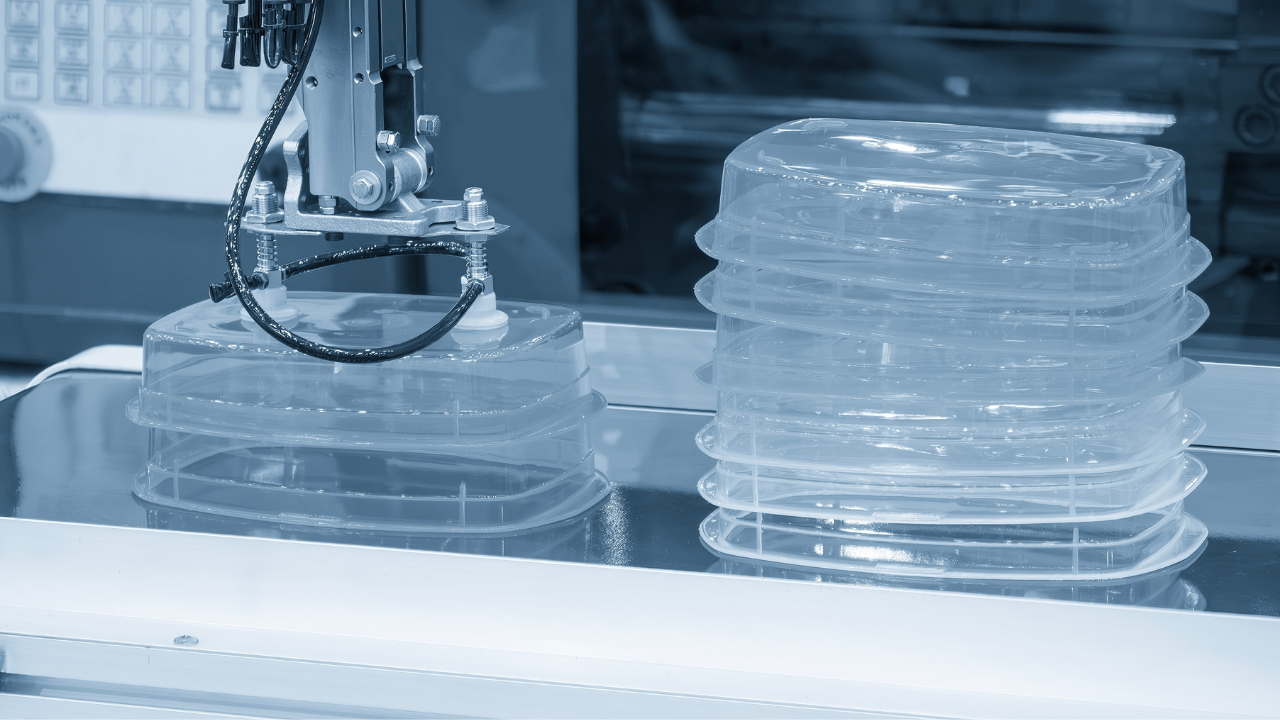
The most widely used process for ABS is Injection molding. ABS has excellent fluidity and thermal stability, making the injection molding can be used to obtain a complex shape of the product. This process is suitable for mass production and can maintain the dimensional precision and surface quality of the product.
Extrusion Molding

ABS is also highly suitable for extrusion molding. ABS sheet, ABS pipe, and ABS rod are all produced through extrusion molding. The advantages are continuous production, high molding efficiency, and the ability that dimensions and thickness can be adjusted as required.
3D Printing

Thanks to their durability, resistance to impact and ease of processing, ABS is perfect for making functional prototypes and various custom products. But ABS also has a warping tendency when it is printed, a heated bed and closed machine is necessary to guarantee the molding quality.
Vacuum Forming

ABS sheet material has excellent plasticity when heated and can be vacuum formed. This processing method allows for diverse product designs while maintaining material strength. If your product needs to combine structure and aesthetics, ABS vacuum forming can provide you with flexible and efficient production.
Sustainability and Recycling of ABS
Recyclability
100% of ABS is recycled and the thermoplastic is recyclable. Scrap and process waste can be returned directly back into the manufacturing process of injection moulding or extrusion. This is not only good for the environment and decreases the cost of raw materials but also dramatically decreases industrial waste.
Applications of Recycled ABS

Although the recycled ABS material, compared with the original material, may have color stability and mechanical properties which may be slightly lower, after modification and blending can meet the requirements for most non high-end uses. Recycled ABS is already being used in many applications including electrical enclosures, automotive parts and office accessories. If you use recycled ABS in the right way, you can save money and get a greener image for your company.
Procurement and Selection Guide
In the actual production, it is very important to choose the appropriate ABS type for a project to work properly. Some of the following may be helpful:
Choose the Right Type
Different types of ABS serve distinct purposes. Before selecting a material, first clarify your product positioning and application to make the right choice between standard ABS and modified ABS. If you have specific requirements for surface finish or performance, you can also order customized ABS materials tailored to your needs.
Calculate Costs

Raw material price adjustment, refitting model and process and other factors influence ABS price. The price of ordinary ABS is relatively stable, and the market price fluctuates slightly. Flame retardant ABS, heat resistant ABS, plating ABS and so on are the higher input and higher production cost products during the development and production so that the unit price is higher. Because of that, when you source, the ABS will shape to the most probable requirements so you want to find that ABS that is perfectly made to order for your needs and not pay more than necessary.
Selecting Suppliers
purchasing printer abs is one thing and purchasing the right supplier for your abs is something different altogether. You need to ensure your supplier is consistent in supply and quality stability in order not to put production at risk. At the same time, you can also request them to present you with the proof to material certification.
Conclusion

As a well-balanced engineering plastic, ABS stands in a class by itself with its versatility and excellent combination of properties. If you are looking for a material that is functional, attractive and cost-effective, ABS would be an option worth looking at. You can always reach out to us for quality plastic solutions.
FAQ
1. Is ABS safe?
ABS itself does not contain toxic substances and is generally considered harmless in most applications. However, if you intend to use it in food-related applications, you must ensure it has passed food safety standards such as FDA certification. Additionally, ABS plastic emits smoke when burned, which may pose potential safety risks.
2. What are the advantages of ABS?
The greatest advantage of ABS is its outstanding comprehensive performance and broad applicability. Additionally, it offers excellent cost-performance benefits. Compared to high-end engineering plastics, ABS strikes a favorable balance between performance and cost, making it particularly suitable for industries requiring mass production and cost-sensitive applications.
3. Which surface finishing can be utilized on ABS parts?
ABS is a plastic with the best surface treatment effect. It is highly suitable for:
(1)Painting: Realizes multiple colors and effects (such as rubber paint, metal paint);
(2)Electroplating: ABS used this way can make the metallic brightness which is pretty stunning;
(3)Vacuum metallization (PVD);
(4)On the surface of goods by screen printing, water transfer printing, etc.
4. Is ABS easy to bond? What methods are recommended?
Yes, ABS exhibits excellent secondary processing properties. Using specialized ABS adhesives or ketone solvents (such as acetone) enables extremely strong bonding, nearly matching the inherent strength of ABS itself. Ultrasonic welding also provides an efficient, clean method for joining ABS components, making it highly suitable for automated production. Additionally, vibration welding or hot plate welding can be employed.</a >


